
"... in kitchens
throughout the land
women were in one camp
or the other
to leave her children
or not to leave
to be true to herself
or not be true
to choose
or not to choose ..."
We’ve just celebrated International Women’s Day, or at least I have. Do you celebrate this annually? Why wouldn’t you is my question. I’m happy to own the label of feminist and will welcome any opportunity to celebrate women; to make more space for women at any table; and to do whatever I can to support other women be they in front, behind, or beside me. And don’t get me wrong, I’m no man-hater. I am happy to support men on their journeys too if and when I can. As a daughter, wife, aunt, cousin, and friend, I’m proud to acknowledge that there are some very fine men among us.
I’ve been reading the fabulous collection of non-fiction by the late Hilary Mantel, A Memoir of My Former Self. One piece in particular has stayed with me, which recounted her unhappy experience of living in Saudi Arabia in the 1980’s (Last Morning in Al Hamra, 1987). I feel sure that the stifled conditions under which women lived then has improved somewhat since those times, but probably not all that much. For obvious reasons, the middle east has been on my mind a lot just recently. In many other countries, such as Iran, Iraq and Syria, the lives women lead are very much dictated by men in power, and to my western eye, appear much smaller than they should be. I’d be the first to admit that I’ve no authority on which to speak about this at all, other than my instinct; I accept of course that I can’t begin to know what their lives are like.
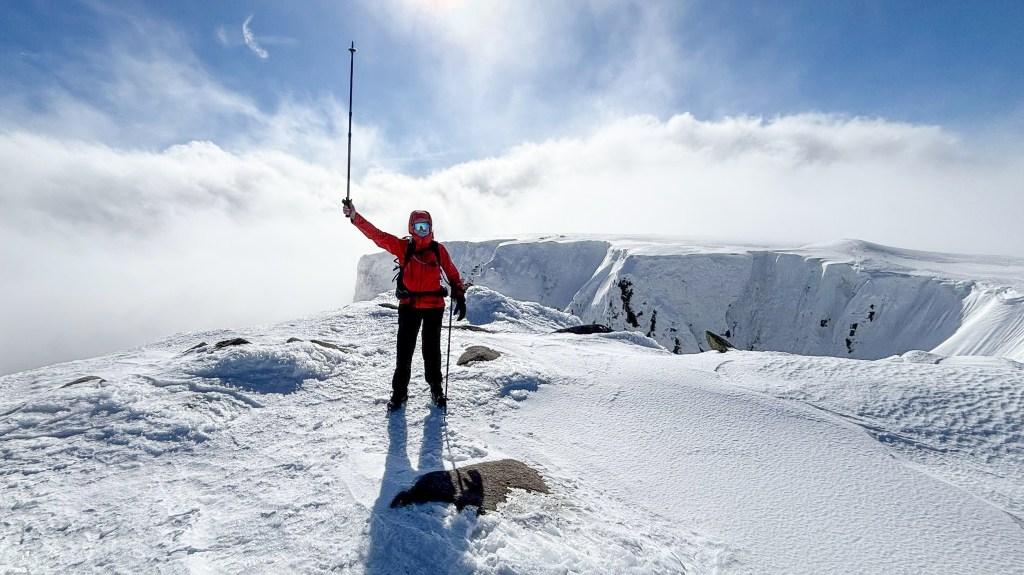
One woman’s life in the UK entered the national conversation in 1995 and I recount her story in this week’s poem. Alison Hargreaves, was a professional climber who, that year, had become the first ever woman to climb Everest without the aid of a sherpa or oxygen. It was a remarkable achievement. Three months later, she sadly died as she descended the summit of K2, where five other climbers also lost their lives. She was also a wife and mother to two young children. Everyone seemed to have an opinion about whether she should have been climbing at all. Many argued that she was first and foremost a mother; it was irresponsible of her to risk her life and deny her children their mother, particularly at such a young age. Two other fatalities on that trip were also parents, but they were male and there were no such conversations about them as fathers. I remember at the time feeling incensed that people would question her right as a woman to make her own choices; I recall many heated discussions with friends and family at the time.
I was lucky to grow up in a household where I was never made to feel that being a girl was a barrier to anything. I could do and be whatever I chose, provided I worked hard enough. I went to an all girls’ secondary school, where it felt normal to assume that we could achieve not as well as the boys, because there were no boys against whom to compare, but in our own right. Such a solid foundation stood me in good stead when I later entered a male-dominated working environment.
It feels all wrong somehow to have to even think about women’s equality because it should be a given. But we do need to think about it and keep talking, celebrating and honouring. Alison Hargreaves’ story has stayed with me, and when invited to write a poem on the theme of Women in History for the York Literature Festival in 2009, it was Alison’s story I wanted to tell. When interviewed about her decision to climb professionally and put her life in danger, she responded that it was better to live one day as a tiger than a thousand as a sheep. I like to think we all have our inner tiger and I work hard to nurture mine. How about you?
 fi wynne writes
Remember it’s all about connection! Please do comment.