
"... someone once told me
you don't always find
what you're searching for
but you find what you need ..."
I’ve written previously about how I value being in nature. It’s widely accepted that spending time outdoors is good for you on so many levels. It improves your mental and physical health. They say, don’t they, that if you have a problem you need to resolve, an obstacle you cannot see beyond, then go for a walk. By the time you get back, either the problem won’t seem so insurmountable, or it will have dissolved, because it was only living in your head anyway. Try it! It does work, I promise you.
I’ve always loved being out in nature and can’t imagine a life without it. For a couple of years, I worked in the wing of a building with no widows. Most days I didn’t have time to leave my desk, so when I finally walked out at the end of my shift, the air smelt deliciously sweet. It blew me away every day.
Nature has been a constant in my life; my appreciation of it grows with age and experience. These days, I’m sensing a deeper connection to organisms such as trees and plants in a way I can’t fully explain. When we struggle to find language to describe what we mean, we often revert to anthropomorphism, but that doesn’t feel appropriate here. I don’t want to bring other life to our level; I want to raise myself to theirs if that makes sense.
I’ve recently travelled to both Kenya and Scotland. I went on safari to Kenya, primarily to see wild animals such as elephants and lions, in their natural habitat. I did and it was amazing. What I didn’t expect was to be equally captivated by the trees, both living and dead. The quiet dignity of fallen trees truly captured my imagination. Whilst constantly scanning the horizon for animals, I regularly saw shapes in tree stumps that resembled the animals out on the plain. I know I’m not unique in that. There’s a word for it: pareidolia, which doesn’t quite capture of the magic of the experience if you ask me.
I couldn’t help but wonder about the life of trees and the language they speak. Like elephants, they are communal and communicate across vast distances. Like matriarchal elephants, there are now studies that describe mother trees, that feed and sustain saplings. And like elephants, they are wise. Don’t take my word for it, feel it for yourself and, if interested, read up on some of the fascinating studies taking place.
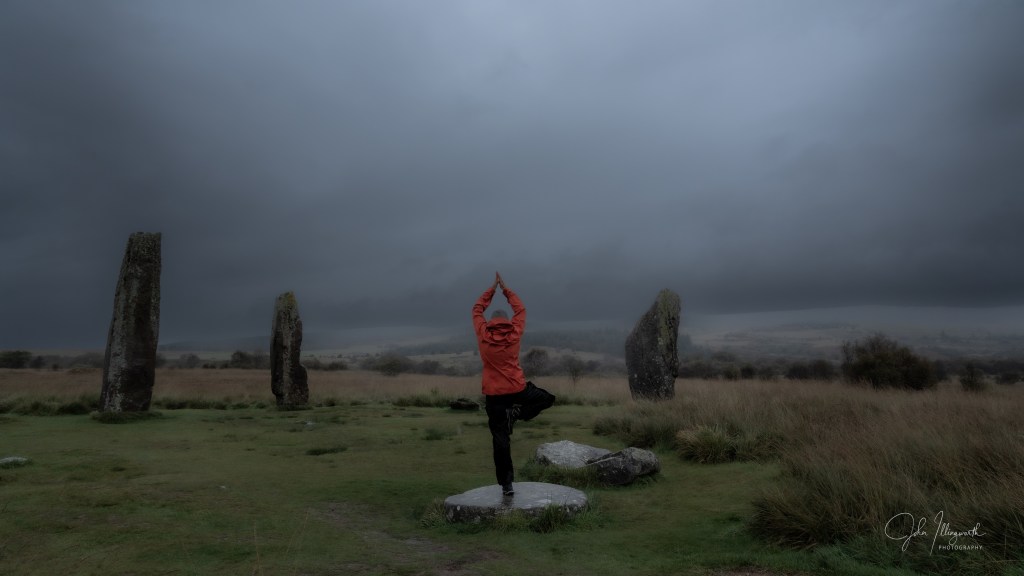
Later, on the Isle of Arran, I visited the stone circles at Machrie Moor, which bear witness to humans living in this area for over 4,000 years. We can only guess at why such circles were constructed. There is so much we do not know. Just as there is much we still don’t understand about the life and language of trees. We are learning all the time about the mycorrhizal network, and so much more.
When I stand amongst stones circles, I feel I’m in the presence of something beyond myself. If they could speak, what stories could they tell I wonder. In some way, they continue, like the fallen savannah trees, to be part of the landscape, creating habitat for lichen, offering shelter to livestock, inspiring awe in humans.
Klaus Conrad, a German psychiatrist in the 1950’s believed that finding connections between unrelated things could be an early sign of schizophrenia. We humans do like to label things don’t we? He called it apophenia. Another word that somehow dilutes the sense of wonder, don’t you think? Back in the 1950’s we had even less information about how the world of nature works than we do now. I wonder what Klaus Conrad would have made of the mycorrhizal network? I’ll give him the benefit of the doubt: he couldn’t know about connections in the same way that we are discovering today, but perhaps if he’d walked in woodland he might have felt it. Just saying.

